- Bonnie Brook, Victoria, Australia
- support@tgsitsolutions.com.au




-
Opening Hour Mon - Fri 8:30 - 4:30, Sat-Sun - CLOSED

Why Every Australian Business Needs a Backup and Disaster Recovery Plan


Why Every Australian Business Needs a Backup and Disaster Recovery Plan
 By
TGS IT Solutions
By
TGS IT Solutions
Imagine arriving at work on a Monday morning only to discover your files are inaccessible, your emails have stopped working, or your server has failed. Whether the cause is ransomware, accidental deletion, hardware failure, or a natural disaster, the question isn’t just how it happened—it’s how quickly your business can recover.
For many small and medium-sized businesses, data is one of their most valuable assets. Losing access to customer records, financial information, project files, or emails can bring operations to a standstill. That’s why having a reliable Backup and Disaster Recovery (BDR) strategy is no longer optional—it’s an essential part of doing business.
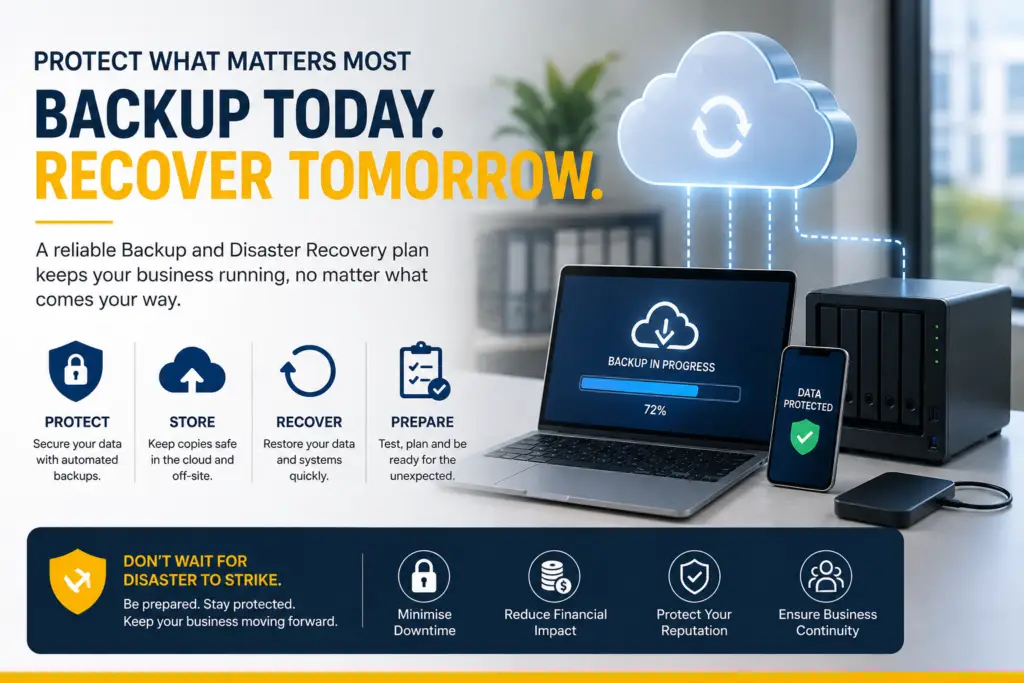
What Is Backup and Disaster Recovery?
While the terms are often used together, backups and disaster recovery serve different purposes.
A backup is a copy of your important business data that can be restored if information is lost, corrupted, or deleted.
Disaster recovery is the process and plan that allows your business to restore systems, applications, and data after an unexpected event, helping you return to normal operations as quickly as possible.
An effective strategy combines both.
Common Causes of Data Loss
Many business owners assume data loss only happens because of cyberattacks, but there are many other risks, including:
- Hardware failure
- Accidental deletion
- Ransomware attacks
- Power outages
- Software corruption
- Stolen or lost devices
- Fire, flood, or other natural disasters
- Human error
Any one of these events can result in significant downtime if your business isn’t prepared.
Why Regular Backups Matter
Backups provide peace of mind by ensuring your important information can be recovered when needed.
A good backup solution should:
- Run automatically
- Encrypt your data
- Store copies in multiple locations
- Be monitored regularly
- Be tested to ensure successful recovery
Creating backups is only part of the process. Businesses should regularly test restores to confirm that files and systems can actually be recovered when required.
The Cost of Downtime
When systems are unavailable, productivity quickly declines.
Employees may be unable to access files, customers may experience delays, and business operations can come to a halt. Extended downtime may also affect your reputation and result in financial losses.
A well-designed disaster recovery plan reduces recovery time and helps minimise disruption.
Cloud Backups Are Not Always Enough
Many businesses believe that storing files in cloud services automatically protects them from every scenario.
While cloud platforms offer excellent resilience, they don’t replace a comprehensive backup strategy. Deleted files, ransomware, user mistakes, or malicious changes can still require a separate backup and recovery solution.
A layered approach provides the best protection.
Key Elements of a Strong Backup Strategy
An effective backup and disaster recovery plan should include:
- Automated daily backups
- Off-site or cloud-based backup storage
- Multiple backup copies
- Recovery testing
- Endpoint protection
- Clearly documented recovery procedures
- Defined recovery objectives for critical systems
The objective isn’t simply to back up data—it’s to restore business operations quickly and confidently.
How TGS IT Solutions Can Help
At TGS IT Solutions, we help Melbourne businesses and schools protect their critical systems through reliable backup and disaster recovery solutions.
Our services include:
- Backup solution design and implementation
- Backup monitoring and reporting
- Disaster recovery planning
- Microsoft 365 backup solutions
- Server and workstation backups
- Business continuity advice
- Ongoing managed IT support
We work with organisations to ensure their data is protected, recoverable, and supported by practical recovery procedures.
Protect Your Business Before Disaster Strikes
No business expects to lose important data—but every business should be prepared for the possibility.
Investing in a reliable Backup and Disaster Recovery strategy helps protect your operations, your reputation, and your customers. More importantly, it provides confidence that your business can recover quickly when unexpected events occur.
If you’re unsure whether your current backup solution is sufficient, TGS IT Solutions can review your environment and recommend a strategy tailored to your business needs.
Don’t wait until data is lost to discover the importance of a recovery plan. Protect your business today and ensure you’re ready for tomorrow.